
What Is ACWR? A Parent's Guide to Pitcher Workload
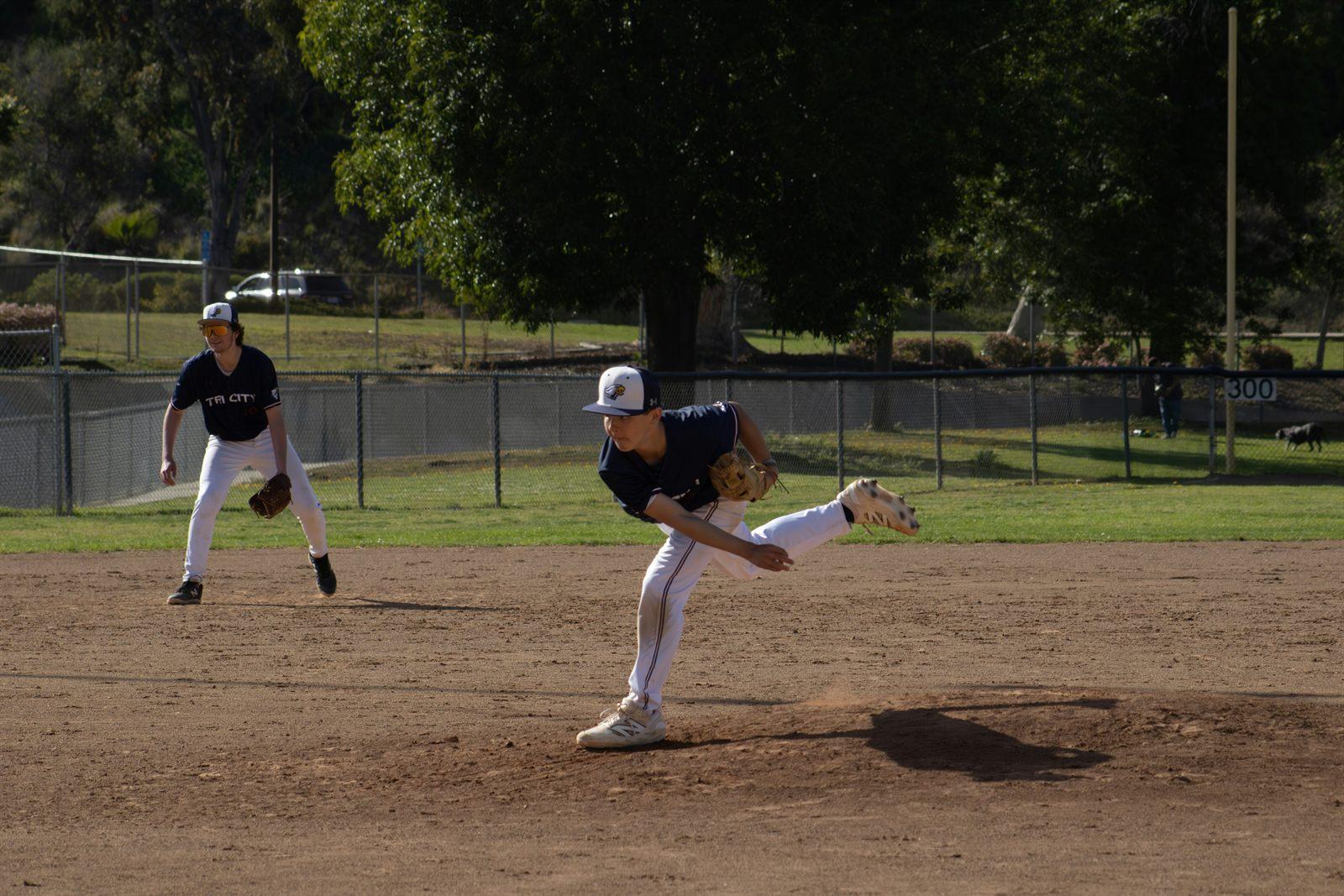
What Is ACWR? A Parent's Guide to Pitcher Workload
If your kid plays travel ball, you have probably heard a coach or trainer mention "workload." You may have heard the term ACWR thrown around in passing. It sounds technical, and most parents nod along without asking what it actually means.
Here is the short version: ACWR is the workload metric MLB athletic training staffs use to manage pitcher health. It stands for Acute to Chronic Workload Ratio, and once you understand the math, it changes how you think about whether your kid is at risk on any given weekend.
Pitch counts tell you about today. ACWR tells you about the trend.
A pitch count caps the number of pitches in a single outing. League rules tell you how many days of rest follow. That is useful and worth respecting.
But pitch counts are a snapshot. They cannot tell you what your kid threw last Tuesday at practice, or how much volume came out of last weekend's tournament, or whether they took a week off in April that left them undertrained for May.
ACWR tracks the trend. Pitch counts track the moment. Both matter, and they answer different questions.
The math, in plain English
ACWR has two numbers and one division problem.
- Acute workload is the total throwing volume over the past 7 days.
- Chronic workload is the average weekly throwing volume over the past 28 days.
Acute divided by chronic gives you the ratio.
A ratio of 1.0 means your kid threw the same amount this week as their typical week over the past month. They are training at a level their body is conditioned for.
A ratio of 1.6 means they threw 60 percent more this week than their average. Their body is not adapted to that load, and published research links spikes like this to elevated injury risk in the following one to two weeks (Hulin et al., 2014; Gabbett, 2016).
A ratio of 0.5 means they threw half their typical load. That is not "rest" so much as detraining. When they come back to a normal week, the ratio spikes hard, and that is where the risk shows up.
What the research says about the safe zone
Sports science research, originally in cricket fast bowlers and now applied across overhead athletes, has identified a useful range:
- 0.8 to 1.3 is the safe training zone. The body is being asked to do roughly what it has been prepared for.
- Above 1.5 is associated with significantly elevated injury risk (Hulin et al., 2014).
- Below 0.8 for an extended period suggests detraining, which leaves the athlete underprepared for the load that comes next.
These thresholds are not magic numbers. They are starting points for conversations between coaches, parents, and clinicians. The decision is always made by the people who know the athlete best.
A real-life example most travel ball families will recognize
A 13-year-old pitcher throws regularly through April. Backyard catch, weekly bullpens, two innings here, three innings there. Their 28-day average lands somewhere around 200 throws per week.
They take a week off for spring break. No throwing, by design. Smart move, right?
When they come back, they have a tournament weekend. Saturday they pitch three innings and play shortstop. Sunday they catch the first game and pitch the second.
On paper, every appearance was inside Pitch Smart guidelines. Pitch counts were respected. Rest days were honored.
Here is what the workload math says. The rest week dropped chronic load. The tournament weekend pushed acute load high. The ratio that Sunday afternoon was likely well above 1.5.
That is the spike pitch counts cannot see. It is also the kind of pattern ACWR is designed to catch.
Why pro teams build their schedules around this
In an MLB clubhouse, pitcher workload is monitored daily. Throws in the bullpen, throws in flat-ground work, throws in games, every one of them logged. The athletic training staff watches the ratio and uses it as one signal among many to decide how a pitcher's week is built. Catch play is dialed up or down. Bullpens are added or pulled. Side sessions are timed to keep the ratio in a productive band.
That is the standard at the top of the sport. The reason youth baseball does not look like that is not because it would not help. It is because the infrastructure to track it does not exist for most travel ball families. The throws happen across multiple coaches, multiple fields, and multiple weekends. Nobody is watching the cumulative number.
ACWR is not the whole story
This is important. ACWR is one signal, not the answer.
It does not tell you about sleep. It does not tell you about mechanics. It does not tell you about whether the shoulder has been quietly sore for two weeks. It does not replace the judgment of a pitching coach, an athletic trainer, or a physician.
What ACWR does is start the conversation. It puts a number on something that is otherwise invisible. When the number flashes red, parents and coaches have a reason to pause and ask the next set of questions.
That framing matters because it keeps the metric in its proper place. A high ratio does not automatically mean shut your kid down. A green ratio does not mean ignore the kid telling you their shoulder feels heavy. It is one piece of information among many.
For more on the warning signs that pair with workload data, see our piece on the five shoulder warning signs every baseball parent should know. For why sleep belongs in the same conversation, see why sleep might be your young pitcher's best arm care tool.
What parents can actually do this week
You do not need a sports science degree to use ACWR. You need three habits:
- Log every throw. Game pitches, bullpen throws, long toss, backyard catch, lessons, and position-player throws. All of it. Workload is cumulative, and the throws nobody counts are the ones that hurt.
- Track the ratio. Once you have 28 days of logging, you can calculate ACWR. A spreadsheet works. So does the Diamond Arm Lab app, which automates it and pairs the number with curated arm care programming.
- Use it as a conversation starter. When the ratio climbs, ask questions. How did the weekend feel? Any soreness lingering? Sleep okay? Then make the call with the information in hand.
The hard part is not the math. The hard part is the discipline to log everything. Most travel ball families never do, and that is exactly why these numbers stay invisible.
The bigger picture
Pitch counts cut serious arm injuries in games (Kriz et al., 2026). What pitch counts do not cover is travel ball weekends with two teams, practice volume, off-season ramp-ups, or the cumulative effect of a busy spring.
ACWR fills the gap by telling you whether the cumulative load is in line with what your kid is conditioned to handle. It is the standard in MLB clubhouses for a reason.
If you want a deeper look at what pitch count rules cover and where they fall short, see our piece on what pitch count rules actually get right (and what they miss). For the case against early specialization, see should your kid play multiple sports? what the research says.
The Diamond Arm Lab app is built around this framework, translated for parents and coaches who do not have a clubhouse staff. You can start a free trial and start logging today. Your card won't be charged until after your 7-day trial ends.
Citations
- Gabbett, T. J. (2016). The training injury prevention paradox: should athletes be training smarter and harder? British Journal of Sports Medicine, 50(5), 273-280.
- Hulin, B. T., Gabbett, T. J., Blanch, P., Chapman, P., Bailey, D., & Orchard, J. W. (2014). Spikes in acute workload are associated with increased injury risk in elite cricket fast bowlers. British Journal of Sports Medicine, 48(8), 708-712.
- Kriz, P. K., et al. (2026). Effects of pitch count and rest policies on youth baseball arm injury rates.
Put this into practice with Diamond Arm Lab.
ACWR, session tracking, and curated throwing programs, all in one app. Your card won't be charged until after your 7-day trial ends.